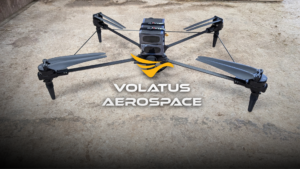
For infrastructure operators watching drone technology mature, beyond visual line-of-sight (BVLOS) operations are the destination. A drone that stays on-site, flies from an operation center, and delivers persistent inspection coverage across pipelines, substations, solar farms, or mining assets is exactly the productivity shift that operations teams have been waiting for. The gap between that vision and what most operators can actually deploy today comes down to three things: regulation, operational discipline and hardware built for the job.
This blog explores the requirements for BVLOS drone inspection in Canada and the United States, how Volatus Aerospace operates within those rules and what the Sentinel Dock serves as a field-deployed hardware.
The Goal: Persistent Remote Inspection at Scale
BVLOS is not a hardware feature. It’s a regulatory posture that unlocks a new operating model, one where the drone stays at the asset, missions are flown by a certified pilot in a control room, and coverage is continuous rather than event-based. That model is what allows a single operation centre to monitor sites hundreds or thousands of kilometers away, cut mobilization costs, respond faster to incidents, and reduce personnel exposure at hazardous or remote locations.
Unlocking BVLOS operations require clearing three separate hurdles: regulatory approvals held by the operator, operational capability to run BVLOS missions safely and hardware designed to support them.
The Real Path in Canada
In Canada, the regulatory pathway for BVLOS depends on the complexity of the operation. Certain lower-risk BVLOS missions can now be conducted under Transport Canada’s Level 1 Complex framework, while operations outside those prescribed conditions continue to require a Special Flight Operations Certificate (SFOC-RPAS). Each application is evaluated against a documented concept of operations, a safety case showing how the operator will manage risk to people and other airspace users, evidence of pilot competency, and a plan for detect-and-avoid coverage over the operating area.
Beyond the SFOC itself, corporate-level requirements matter. Operators need the appropriate RPAS certifications, standard operating procedures, incident-reporting practices, and a training program that keeps pilots current. Transport Canada has been signaling a move toward more standardized lower-risk BVLOS pathways, but complex operations route through the SFOC process.
For an operator starting from zero, the process can take months and a significant investment in documentation, testing and airworthiness reviews.
The Real Path in the United States
In the U.S., there is no standing BVLOS rule under Part 107 today. Operators fly BVLOS under an FAA waiver, granted after a documented safety case that mirrors what Transport Canada requires in spirit: how you’ll see and avoid other aircraft, how you’ll maintain command and control, how you’ll respond to lost-link or emergency conditions, and how your pilots are trained.
The FAA’s proposed Part 108 framework would formalize much of this into a repeatable framework, easing the case-by-case waiver burden and creating a clearer path for scaled BVLOS operations. Until Part 108 is in force, waivers remain the practical mechanism, and the timeline and cost to obtain one is a real barrier to entry for operators building their program from scratch. A waiver on normal timelines takes months and non-trivial investment, before a single flight is authorized.
The takeaway on both sides of the border: BVLOS is achievable, requires a regulatory stack that takes time and expertise to build.
How Volatus Operates
Volatus Aerospace flies BVLOS missions today, supported by regulatory approvals and operational systems developed over years – not weeks. These include SFOCs issued by Transport Canada, FAA waivers in the United States, and the corporate certifications and standard operating procedures required to maintain those authorities.
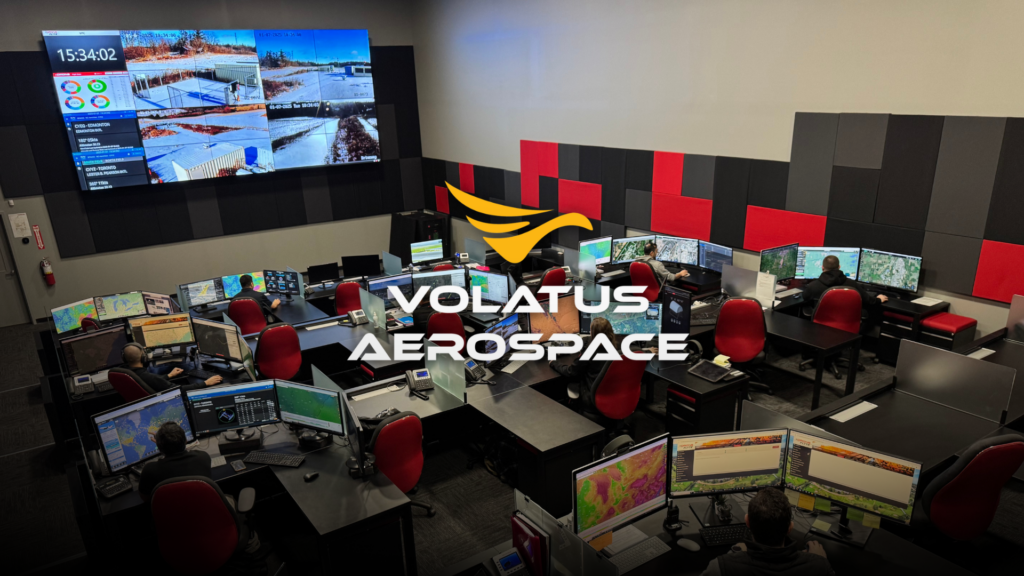
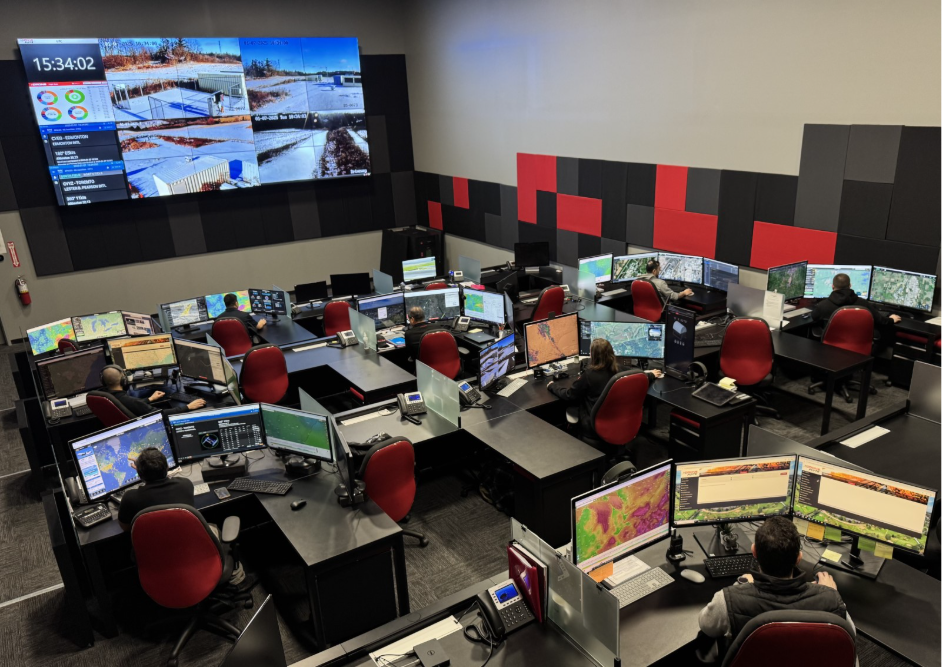
Our pilots are trained on BVLOS mission types. Our Operations Control Centre (OCC) is set up to run scheduled,on-demand flights across multiple sites. Detect-and-avoid strategies, secure communications, and lost-link procedures are tested and implemented into operations.
That operational foundation is what transforms a hardware sale into a fully managed mission. For clients, it removes the months-long regulatory process that would otherwise stand between them and the inspection data they need.
Learn How Volatus Does Aerial Monitoring
The Sentinel Dock in Practice
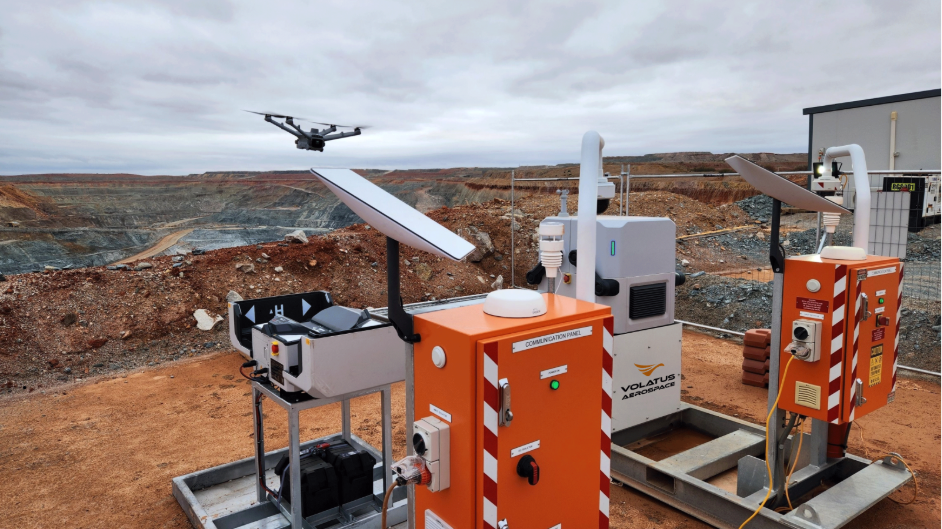
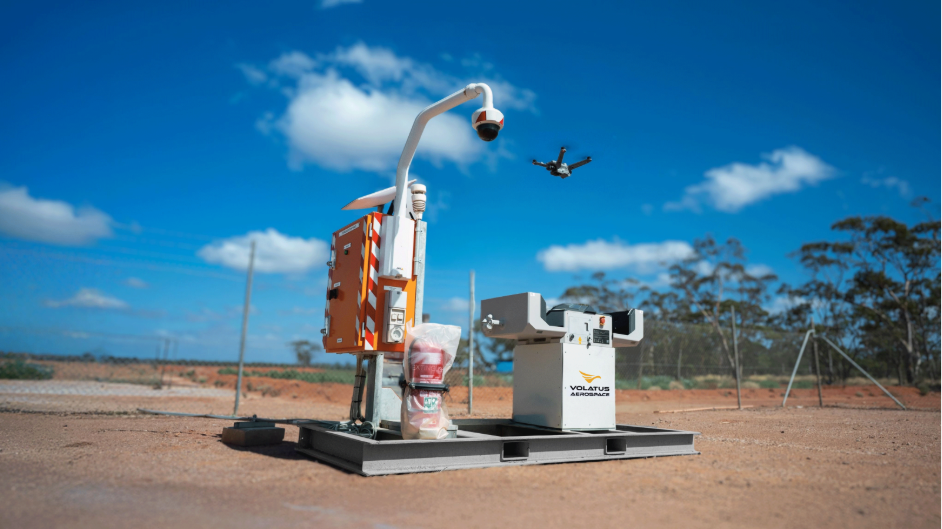
For a Volatus BVLOS operation, the Sentinel Dock is the field asset that closes the loop. Instead of dispatching a crew every time an asset needs inspection, a pilot in the OCC flies the mission from wherever they are.
That changes the economics of persistent inspection in three practical ways: Sites that were once impractical to inspect regularly become accessible—from remote pipelines and isolated substations to mine tailings ponds and off-grid solar farms. With a dock deployed on-site, quarterly inspections can become daily monitoring with virtually no incremental field labour. Starlink-ready communications and optional solar or hybrid power mean remote no longer has to mean unreachable.
Incident responses are reduced from hours to minutes. Whether triggered by a 2 a.m. alarm, lightning strike, suspected leak or intrusion alert, the Operations Control Centre can launch a mission and deliver visual or thermal imagery within minutes—eliminating the need to dispatch personnel and wait for them to reach the site. Much of the value lies in closing the gap between knowing something happened and understanding what happened.
Field-team exposure is reduced during routine inspections of confined spaces, elevated assets, energized substations and hazardous facilities. With dock-based drones operated remotely through the OCC, recurring inspections can be completed without sending personnel into the field, allowing teams to focus on the work where an on-site presence is truly required.
The hardware is engineered to operate without constant on-site oversight. Redundant communications help the OCC maintain command and control, ADS-B supports airspace awareness, and self-recovery and integrated fire-suppression systems enable truly unattended operation. A broad operating envelope supports both Canadian winters and hot climates, while autonomous charging prepares the aircraft for each mission. Together, these capabilities allow a Volatus pilot in the Operations Control Centre to conduct real missions over critical infrastructure without personnel at the site.
Putting It Together
BVLOS drone inspection is not enabled simply by deploying the hardware. It depends on three interconnected elements: regulatory approvals held by the operator, the operational discipline required to maintain those approvals, and technology engineered for the mission.
Volatus Aerospace brings all three together through existing SFOCs and FAA waivers, trained pilots and staffed Operations Control Centres, and the Sentinel Dock as the deployed field asset. For infrastructure operators, this turns BVLOS from a future ambition into an operational service—without requiring them to build their own regulatory and operational framework first.