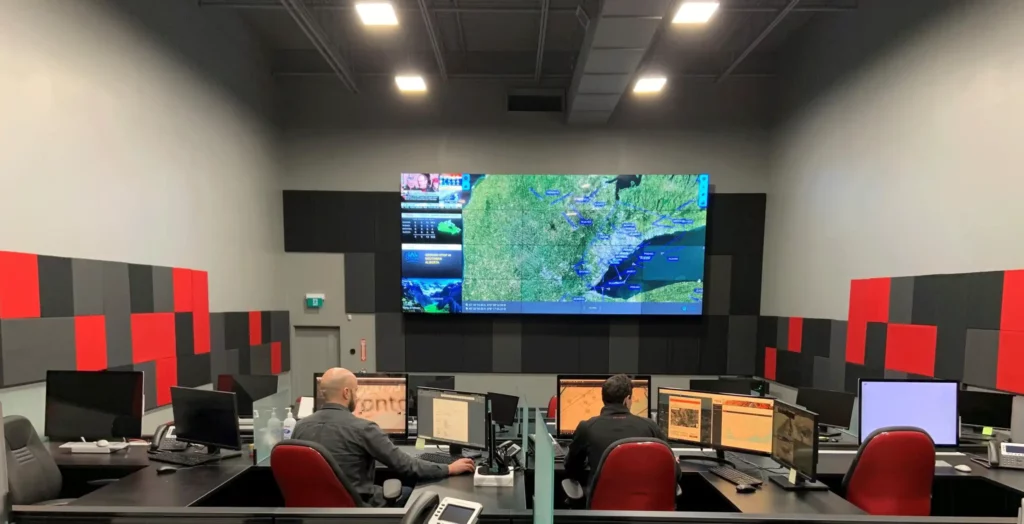
Volatus Aerospace’s Operations Control Centre provides the infrastructure, expertise and real-time situational awareness required to manage remotely piloted and autonomous aircraft operations across multiple locations.
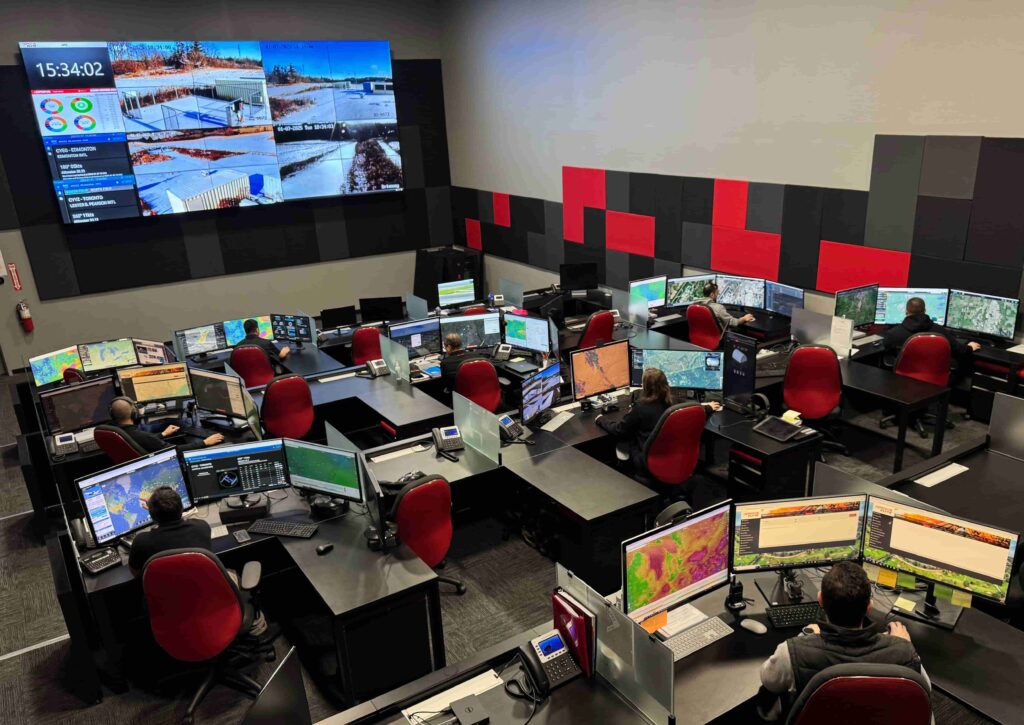
Volatus Aerospace’s Operations Control Centre (OCC) provides the infrastructure, expertise and real-time situational awareness required to manage remotely piloted and autonomous aircraft operations across multiple locations.
Located in Vaughan, Ontario, the OCC serves as a centralized command environment where trained personnel monitor aircraft, coordinate missions, manage operational risk and support customers with live data and intelligence.
From Beyond Visual Line of Sight operations and time-sensitive cargo delivery to infrastructure inspection, public safety and persistent surveillance, the Operations Control Centre enables organizations to deploy advanced aerial capabilities without building and staffing their own remote operating infrastructure.
Talk to our team about remotely managed aerial operations.
Aircraft may be operating hundreds or thousands of kilometres away, but mission oversight remains centralized.
The OCC connects remote aircraft, field teams, sensors, communications networks and customer stakeholders within a coordinated operational environment. This allows Volatus to manage geographically dispersed missions using standardized procedures, experienced personnel and real-time operational data.
By centralizing mission management, customers can scale operations across multiple sites while maintaining consistent levels of safety, oversight and performance.
The OCC supports every stage of an operation, from initial planning through mission execution and post-flight review.
Volatus personnel assess mission requirements, operating environments, airspace, communications, weather, aircraft performance and regulatory considerations before deployment.
Mission records, performance data and operational observations can be reviewed to support reporting, compliance, continuous improvement and future mission planning.
During operations, trained personnel can monitor aircraft position, system status, communications, sensor feeds and mission progress in real time.
Operational Review Loop
Live video, imagery, telemetry and sensor information can be delivered to authorized stakeholders, supporting faster and more informed decision-making.
The OCC can integrate available airspace information, aircraft tracking, radar and other situational-awareness tools to help teams identify hazards and manage operational risk.
Operators can coordinate aircraft, field personnel, customer teams and other mission assets from a common operating environment.
The OCC supports Volatus Aerospace’s BVLOS operating model by providing centralized oversight, communications, mission coordination and situational awareness.
Aircraft deployed at customer sites or remote locations can be monitored and managed through the OCC, reducing the need to place a complete operating team at every location.
The Centre can support automated and remotely initiated missions, including recurring inspection routes, scheduled surveillance and drone-in-a-box operations.
Data from electro-optical cameras, thermal sensors, LiDAR, mapping systems and other payloads can be transmitted from the field for review, coordination and delivery.
Centralized oversight allows organizations to expand from a single deployment to multiple operating locations while maintaining common procedures and operational standards.
Customers can access Volatus personnel, systems and infrastructure according to the needs of the mission, whether supporting a proof of concept, a temporary deployment or an ongoing operational program.
Aircraft may be operating hundreds or thousands of kilometres away, but mission oversight remains centralized.
The OCC connects remote aircraft, field teams, sensors, communications networks and customer stakeholders within a coordinated operational environment. This allows Volatus to manage geographically dispersed missions using standardized procedures, experienced personnel and real-time operational data.
By centralizing mission management, customers can scale operations across multiple sites while maintaining consistent levels of safety, oversight and performance.
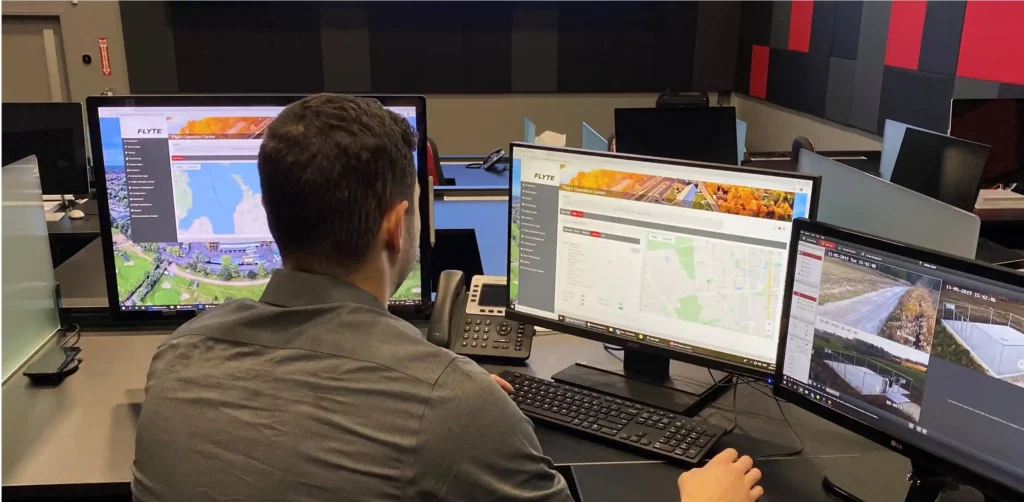
Volatus brings together aircraft, autonomy, operational expertise, regulatory knowledge, training and aerial intelligence within one organization.
Our teams select and integrate aircraft and sensors according to the mission rather than forcing every customer into a single technology solution.
Operations are managed using disciplined aviation procedures focused on safety, reliability, accountability and continuous oversight.
Volatus has extensive experience working within evolving remotely piloted aircraft regulations and supporting advanced operations.
Customers can begin with a pilot program and expand into ongoing, multi-site operations as requirements develop.
Our teams work with customers to turn technology into an operational capability that can perform reliably in real-world environments.
Many organizations recognize the value of remotely piloted and autonomous aircraft, but face challenges related to staffing, regulatory approvals, infrastructure, communications and operational management.
Volatus can support customers through each stage of deployment, beginning with mission assessment and proof of concept, followed by operational validation, integration and ongoing service delivery.
Whether the objective is to inspect infrastructure, deliver critical cargo, monitor a remote facility or establish persistent aerial awareness, Volatus provides the operational framework required to move from concept to capability.