BVLOS Operations

Extend aerial operations beyond visual range with integrated aircraft, remote monitoring, and mission coordination. Volatus Aerospace enables long-range inspection, surveillance, emergency response, and cargo operations through a coordinated BVLOS operating model.

Overview

Beyond Visual Line of Sight (BVLOS) operations extend drone missions beyond the direct visual range of the pilot, enabling aerial data collection, monitoring, inspection, delivery, and response across larger and harder-to-access areas. 

Volatus Aerospace supports BVLOS operations for remote asset monitoring, corridor inspection, emergency response, and logistics, and continues to expand the range of missions it flies beyond visual range. By combining aircraft, operational expertise, remote monitoring from its Operations Control Centre, communications, and mission coordination, Volatus helps organizations take aerial operations past the limits of conventional visual-range flights. 
BVLOS operations are governed by a framework that covers the aircraft, the operating environment, communications, airspace, mission requirements, and the applicable approvals. The right approach depends on the aircraft, where it will operate, the type of operation, and what the mission requires.

In Canada, Transport Canada’s rules that took effect on November 4, 2025 allow lower-risk BVLOS operations without a Special Flight Operations Certificate (SFOC), provided the operator holds an RPAS Operator Certificate (RPOC) and the pilot holds a Level 1 Complex Operations certificate. These flights must stay in uncontrolled airspace, below 122 m (400 feet), and away from airports and aerodromes, with an aircraft of 150 kg or less. Medium drones (over 25 kg) must stay at least 1 km from populated areas, while small drones may also fly over sparsely populated areas. Operations outside those limits, such as higher altitudes or aircraft over 150 kg, are authorized case by case through an SFOC. Volatus works within both pathways.

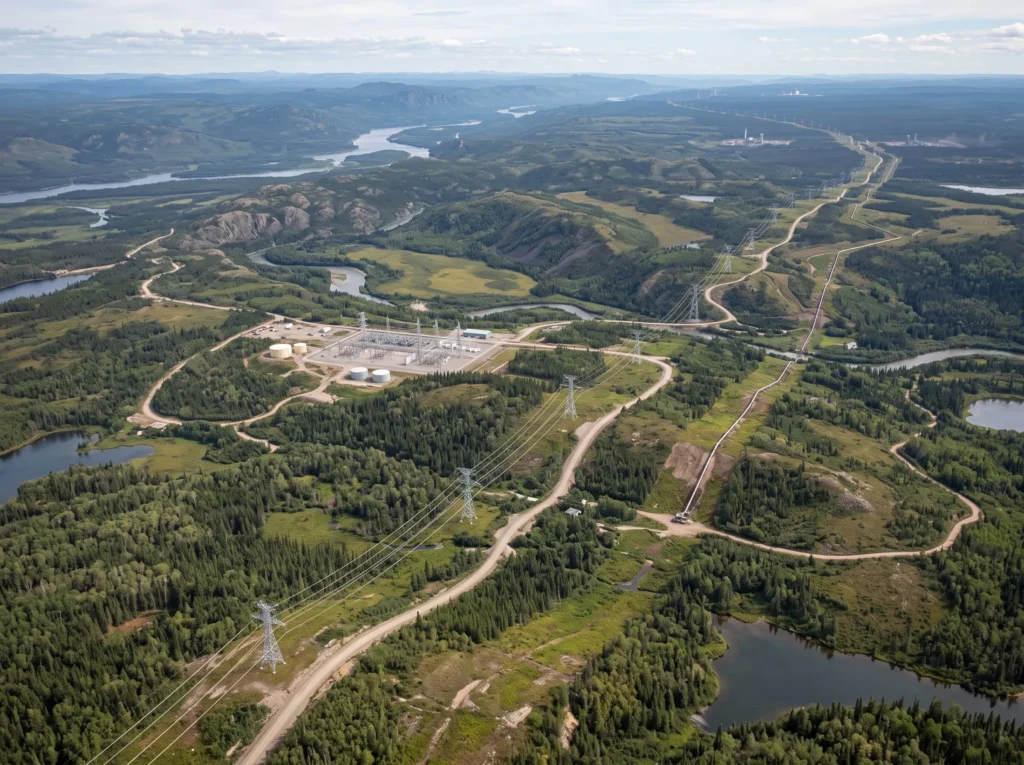
BVLOS is particularly useful when an operation needs to cover remote assets, long corridors, large geographic areas, or locations where maintaining direct visual contact with the aircraft is not practical.

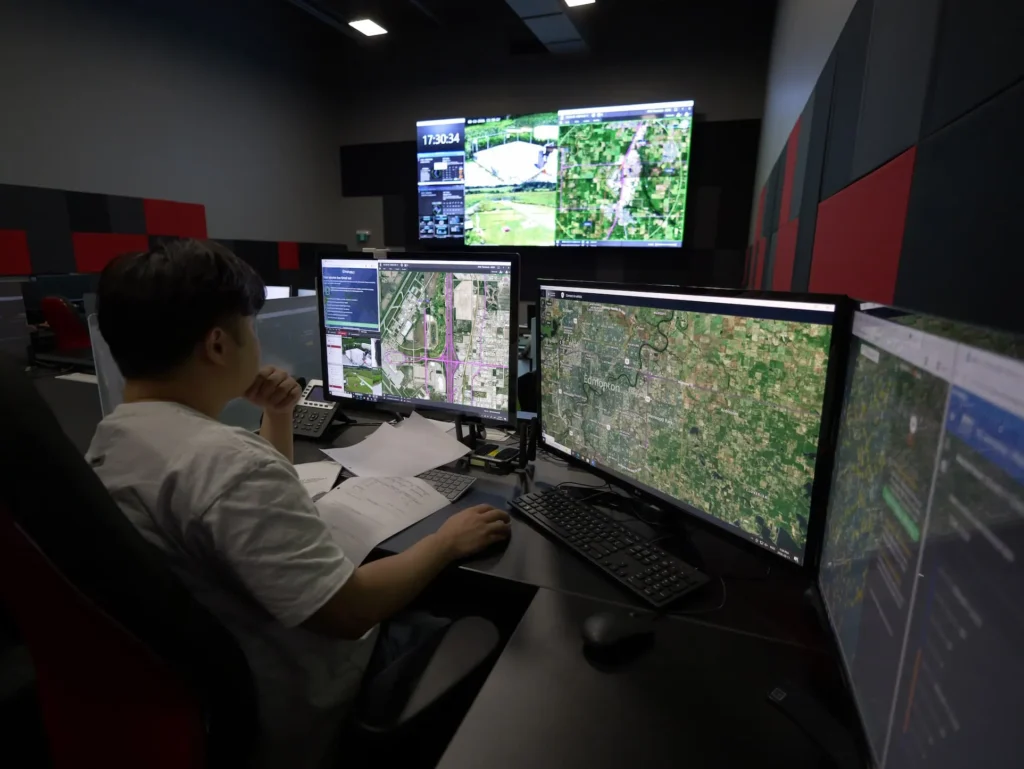
For Volatus, BVLOS is part of a broader remote operations model. Its Operations Control Centre (OCC) connects remote aircraft, field teams, sensors, communications networks, and customer stakeholders within a coordinated operating environment. This allows missions to be monitored and coordinated even when aircraft are operating far from the OCC.
What is BVLOS?

BVLOS stands for Beyond Visual Line of Sight. It refers to drone operations where the aircraft operates beyond the direct visual range of the remote pilot.
Illustrative missionRemote corridor inspection
Field base
Field pilot
Remote asset
Pilot's direct view
01 / 04Launch & connect
Conceptual - not live data

What BVLOS enables

Remote access

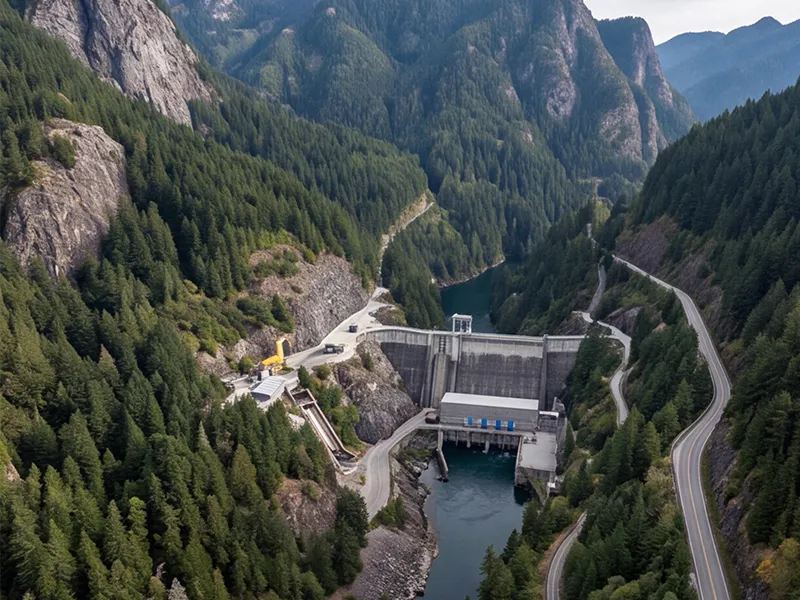
BVLOS operations can reach assets and locations that are difficult or impractical to monitor through conventional visual operations.

Extended corridors

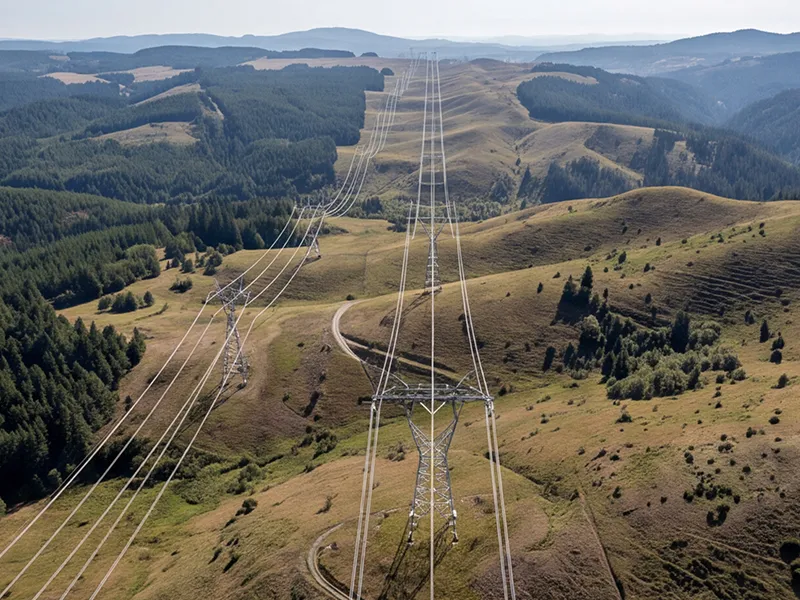
Long infrastructure such as pipelines, utility lines, and transportation corridors can be monitored across larger distances.

Large-area coverage

Extended-range operations can support aerial monitoring across broad areas during surveillance, wildfire, and disaster response missions.

Repeatable operations

BVLOS can support recurring inspection and monitoring programs where consistent aerial coverage is required over time.

Heavy-lift applications

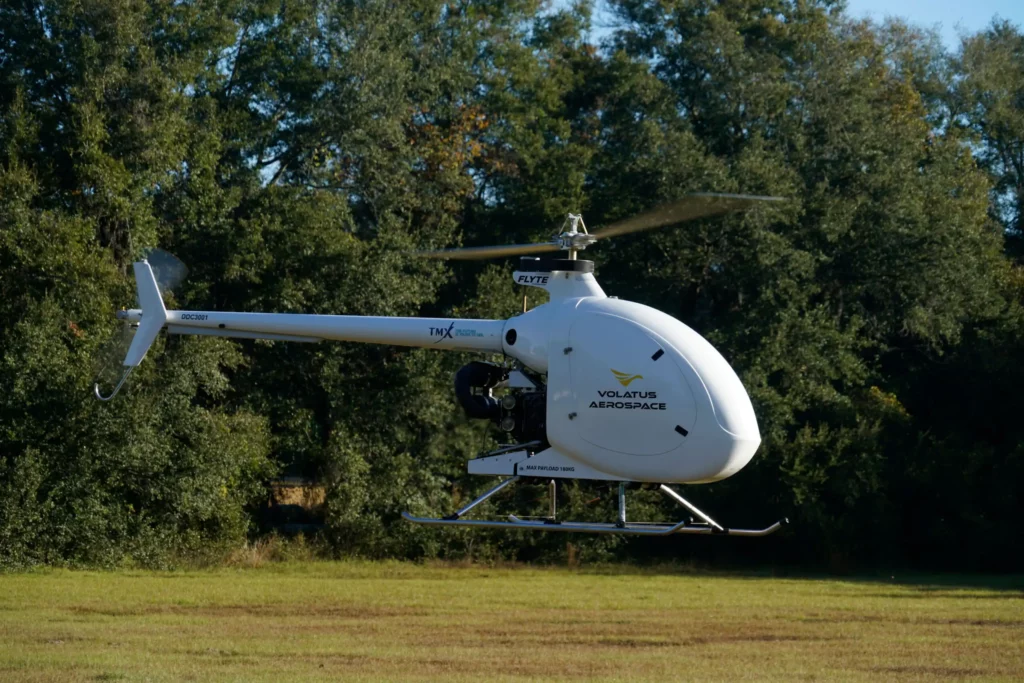
Extended-range operations open the door to cargo delivery and other missions that need greater payload capacity. Volatus is developing the Condor XL, a heavy-lift aircraft designed to carry up to 180 kg over a 200 km range.

The value of BVLOS is therefore not simply the ability to fly beyond visual range. It is the ability to build an aerial operation around the geographic scale and operational requirements of the mission.

Where BVLOS fits into operations

Agricultural and environmental surveying

Heavy-lift platforms support spraying and large-area operations, and Volatus provides multispectral surveying and aerial data collection for agricultural and environmental applications. As regulations and approvals for extended-range operations in these sectors mature, BVLOS will let these programs cover far larger areas.

Asset inspection

BVLOS allows longer operating distances for inspecting remote corridors and geographically scattered infrastructure. Volatus brings more than 75,000 flight hours of crewed pipeline integrity monitoring across North America to this work, and is extending that experience to drone-based BVLOS operations flown from its Operations Control Centre.

Emergency and disaster management

BVLOS supports wildfire and disaster monitoring where aerial visibility needs to extend across the incident area. Volatus holds Transport Canada approval for long-distance, remotely piloted BVLOS operations at night across Canada, which supports nighttime thermal wildfire detection, search and rescue, and other time-critical missions, alongside rapid mapping and mission coordination.

Logistics and delivery

BVLOS enables cargo delivery to remote or inaccessible locations. Volatus’s cargo operations grew out of Drone Delivery Canada, and its heavy-lift program includes the Condor XL, in development to carry up to 180 kg over 200 km.

Surveillance and monitoring

BVLOS operations extend aerial visibility over remote or hard-to-reach assets and across the wider operating area. Applications include infrastructure, perimeter, utility, and corridor surveillance.

How Volatus supports BVLOS operations

BVLOS operations require more than an aircraft capable of extended-range flight. Aircraft, payloads, communications, remote monitoring, regulatory approvals, and mission planning all need to work together. Volatus brings these elements together through a coordinated operational approach.

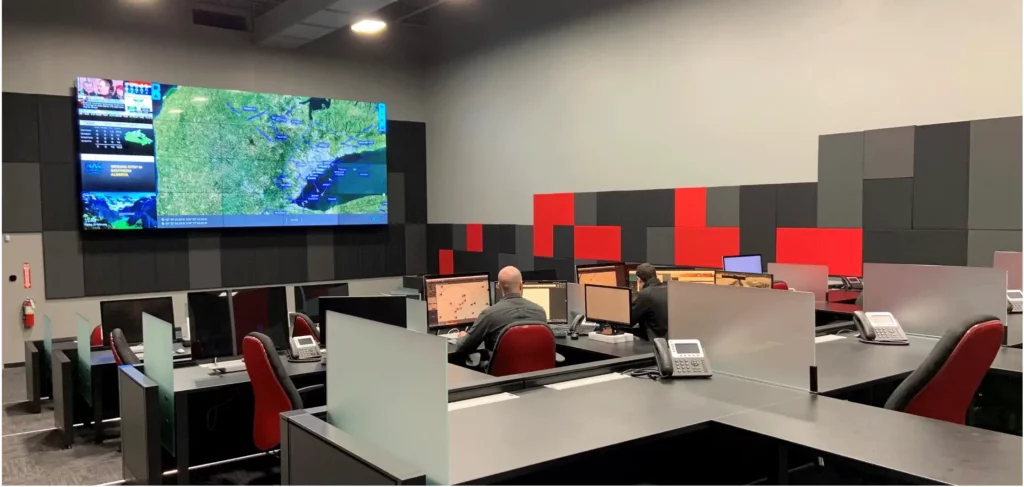
The Operations Control Centre (OCC) provides centralized oversight of remote aircraft operations. Certified OCC pilots monitor aircraft position, system status, communications, sensor feeds, and mission progress while coordinating with field and customer teams. The OCC is built to integrate new aircraft as they come into service, which recently included the first remotely operated flight of Dufour Aerospace’s Aero-30 from the Volatus control centre.

Volatus can also tailor the aircraft, payload, and operating approach to the mission, whether it involves infrastructure inspection, surveillance, emergency response, logistics, or monitoring. For recurring programs, centralized oversight supports consistent operations across multiple locations.
Proven operations

Volatus’s BVLOS capability is built on experience across commercial, infrastructure, logistics, and emergency applications, flown with both crewed and remotely piloted aircraft.

10,000+ remotely piloted flights

Volatus has conducted more than 10,000 RPAS flights from its Operations Control Centre, giving it deep experience in planning, monitoring, and continuously improving distributed aerial operations.

Remote and difficult-to-access locations

Volatus also supports cargo and aerial operations for remote communities and infrastructure where conventional access is difficult or costly.

75,000+ pipeline monitoring flight hours

Volatus has surpassed 75,000 flight hours of crewed pipeline integrity monitoring across North America. That operational knowledge of long linear infrastructure now informs its drone-based BVLOS programs.

100,000 miles of utility infrastructure

Volatus has been selected to provide RPAS inspection, mapping, and data services across approximately 100,000 miles of transmission and distribution lines under a multi-year agreement with a major North American utility.

National nighttime BVLOS approval

Transport Canada has approved Volatus to conduct long-distance, remotely piloted BVLOS operations at night across Canada, in atypical airspace below 400 feet over low-density areas.

Remote cargo operations at an international airport

At Edmonton International Airport, Volatus completed more than 3,000 commercial drone cargo flights covering over 8,500 km, operated from its OCC in Toronto, 3,300 km away. The project's second phase was the first drone operation in Canada to safely cross an active runway glide path.

These operations show how BVLOS moves beyond individual demonstrations into repeatable aerial programs that support real operational requirements.

Why Choose Volatus

01

BVLOS operational experience

Volatus flies extended-range operations for surveillance, infrastructure inspection, emergency response, and logistics, and keeps adding mission types as approvals and platforms mature.

02

Centralized operational oversight

The Operations Control Centre provides a centralized environment for aircraft monitoring, mission coordination, communications, situational awareness, and data delivery.

03

Platform-agnostic approach

Volatus selects and integrates aircraft and sensors according to the mission rather than relying on a single platform or payload configuration.

04

Multi-sensor capability

BVLOS missions can incorporate electro-optical, thermal, lidar, mapping, and other payloads depending on the application and data requirements.

05

Crewed and uncrewed aviation under one roof

Decades of crewed aviation experience, including pipeline patrol, inform how Volatus plans, flies, and scales its remotely piloted operations.

06

Scalable operations

Centralized oversight supports individual deployments as well as recurring and multi-site operations, helping organizations move from single missions toward broader aerial programs.

07

Regulatory expertise

Volatus holds air operator certificates, Canadian Transportation Agency licences, dangerous goods authorizations, and specialized RPAS approvals, including national approval for nighttime BVLOS. It works within Canada's lower-risk BVLOS framework and secures SFOCs for operations beyond it.

See if BVLOS fits your mission

Tell us where you need to operate, what you need to monitor, inspect, or transport, and the scale and frequency of the operation. Volatus Aerospace will assess your requirements and recommend the appropriate aircraft, payload, regulatory pathway, operational approach, and mission workflow for your BVLOS program.

Frequently Asked Questions

01What is BVLOS?
BVLOS stands for Beyond Visual Line of Sight. It refers to drone operations where the aircraft operates beyond the direct visual range of the remote pilot.
BVLOS operations can support remote asset monitoring, infrastructure inspection, surveillance, emergency and disaster response, logistics and delivery, and agricultural and environmental applications.
Yes. BVLOS operations are well suited to longer-distance monitoring and inspection of linear infrastructure. Volatus combines more than 75,000 flight hours of crewed pipeline integrity monitoring with drone-based BVLOS operations flown from its Operations Control Centre.
Yes. BVLOS operations can support large-area wildfire and disaster monitoring, extending aerial coverage during time-sensitive response. Volatus’s national nighttime BVLOS approval supports missions such as thermal wildfire detection after dark.
Yes. BVLOS supports cargo delivery to remote and difficult-to-access locations. Volatus has flown thousands of remotely piloted cargo flights and is developing the Condor XL, designed to carry up to 180 kg over a 200 km range.
Yes, as approvals for these operations expand. Heavy-lift platforms support spraying across larger operating areas, and Volatus provides aerial data collection and multispectral surveying for agricultural and environmental applications.
Since November 2025, lower-risk BVLOS operations can be flown without an SFOC by certified operators and pilots, in uncontrolled airspace below 122 m (400 feet), away from airports and aerodromes, with aircraft up to 150 kg. Medium drones must stay at least 1 km from populated areas. Operations outside those limits, such as higher altitudes or heavier aircraft, require an SFOC from Transport Canada. Volatus works within both pathways.
Volatus uses its Operations Control Centre to provide centralized oversight of remote aircraft operations. The OCC supports mission planning, aircraft monitoring, communications, mission coordination, operational review, and data delivery.
Yes. Payloads are selected according to the mission. Depending on the application, BVLOS operations can incorporate electro-optical, thermal, lidar, mapping, and other sensing technologies.
Yes. Centralized operational oversight supports recurring missions and multiple operating locations while maintaining common procedures and operational standards.
No. BVLOS operations depend on the aircraft, operating environment, communications, mission requirements, regulatory framework, and applicable approvals. The appropriate platform and operating model need to be determined for each operation.

Talk To An Expert

Talk To An Expert

Our experts are here to understand your needs and provide the right solutions for your mission.