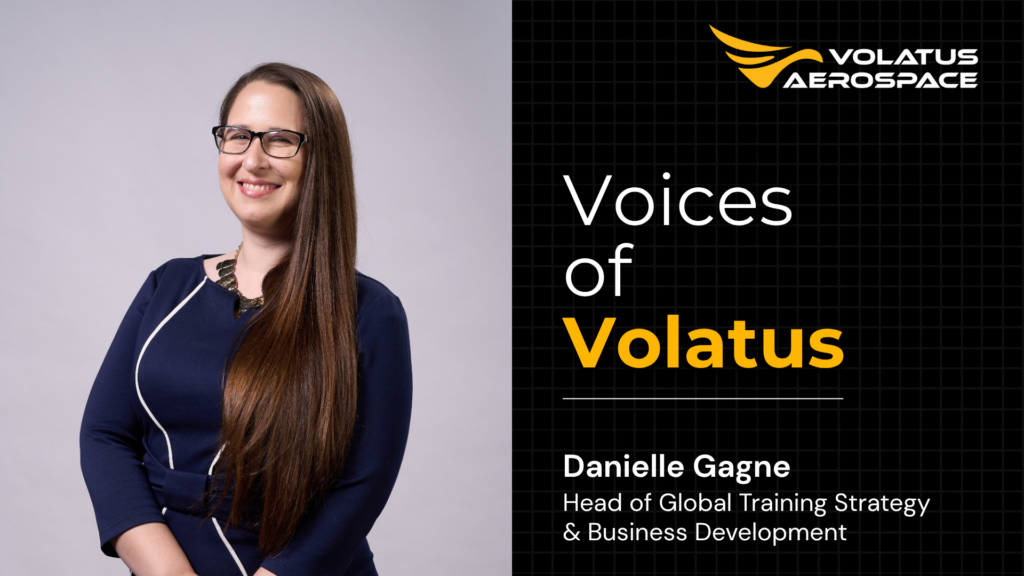
For Danielle Gagne, a career in the drone industry has always been about more than the technology itself. It is about what people can accomplish when they have the knowledge, training and confidence to put that technology to work.
As Head of Global Training Strategy & Business Development at Volatus Aerospace, Danielle works closely with a global team of instructors and subject matter experts to develop training programs that turn drones, sensors and emerging technologies into practical, real-world capabilities. Since joining Volatus in December 2021, she has helped support the continued growth of Volatus Aerospace, taking on many roles within the company. In her most recent role, she has led the development of Volatus Academy, supporting its instructors in delivering training in Canada and Internationally, from the Arctic to the Caribbean and beyond.
That focus on capability building can be seen across the Academy’s programs, particularly in areas where the right skills can have an immediate impact in the field. From thermal imaging and infrastructure inspection to public safety and emergency response, training gives pilots the practical experience to move beyond simply operating an aircraft to using it effectively as part of a mission.
One example is Volatus Academy’s upcoming Advanced Drone Search & Rescue (SAR) course, taking place November 16–19 in Vaughan, Ontario. Led by SAR instructor Eric Kehoe, the four-day program combines classroom instruction with hands-on, mission-based training in SAR planning, thermal imaging, victim detection, mapping and night operations. Participants will work through realistic field scenarios designed to prepare advanced drone pilots and emergency-response professionals to deploy drones effectively when time, information and safety are critical.
In this edition of Voices of Volatus, Danielle shares what drew her to the industry, why training is essential to building meaningful drone capabilities, and how an unconventional background in art history and the performing arts continues to shape the way she approaches education, communication and technology today.
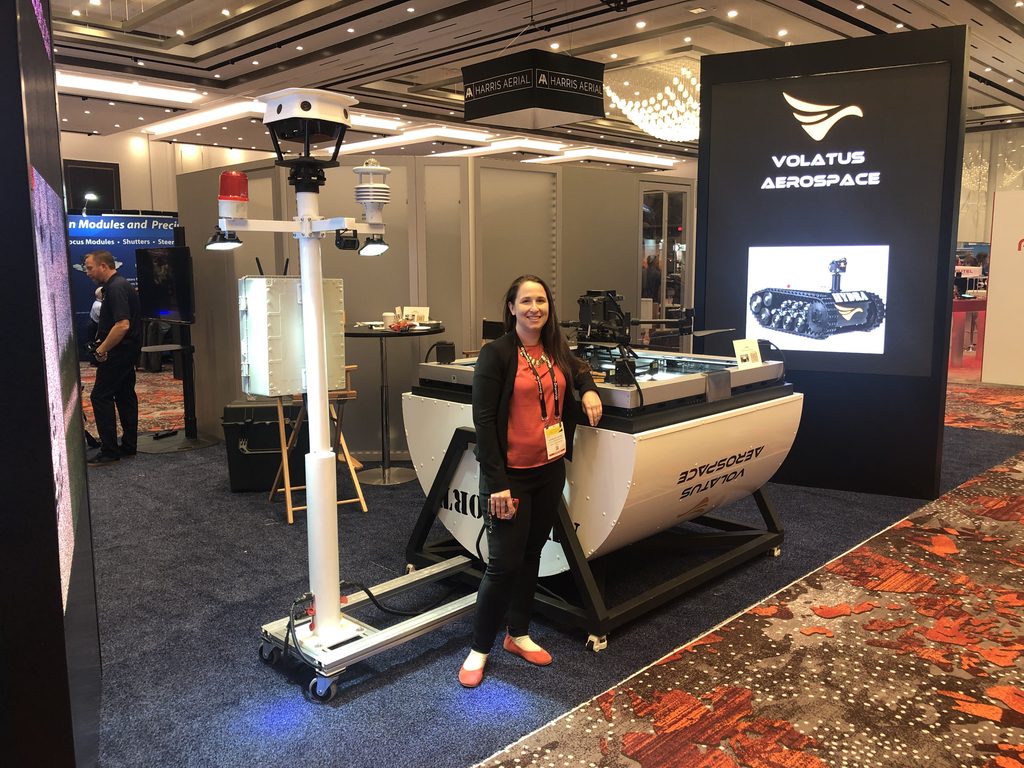
What do you enjoy most about working with your team?
I get to work with a team that is driven by a passion for what they do. I learn daily from their incredible knowledge and experience. I am inspired by their dedication; they’ve literally gone everywhere to the extreme Arctic north to the Caribbean and the Middle East to train. Getting to work with a team like that makes what I do more than an occupation; it’s a passion.
What excites you most about the work you do?
I know I was quoted in saying something similar in a recent CDR article, but without training, a drone or a sensor is just an expensive piece of really cool technology. I get to support a team of experts who help others transform cool pieces of technologies into meaningful capabilities. They find hidden hotspots, unexploded ordinances, and lost people. They discover problems and risks that aren’t visible with the naked eye: land movement that can cause a landslide, hidden disease in crops and forests, equipment operating too hot and on the verge of breaking down or catching fire. They help soldiers and public safety personnel in the field see around the next corner and what lies ahead, to respond faster and with more information, to access hazardous areas so they don’t have to put their lives at risk. They give Veteran soldiers a second career or a meaningful hobby when they muster out of service. We train people to use drones to accomplish these things and so much more.
What first sparked your interest in aerospace, aviation, drones, autonomy or technology?
I started my career in the drone industry as an editorial analyst for Commercial UAV News. I got to interview the leaders in the industry, everyone from the engineers who made the sensors, software, and the hardware; policy makers and regulators; the end users across multiple sectors (construction, mining, energy, oil & gas, conservation, universities, agriculture, utilities, and more); and the aggregators and problem solvers. Their compelling and inspiring stories reeled me in, and there was no turning back; I was hooked. I quickly saw that drones were a tool that could really make a measurable difference in everything we do, taking on the dull, dirty, and dangerous tasks people have had to do daily to keep our communities functioning. I always wanted to do something meaningful and important, and this felt meaningful and important.
What skills or experiences have shaped your career the most?
The pandemic hit early on in my career and it put a spotlight on what can happen when society is shutdown, and people can’t connect or work together like they would normally. It also underlined just why and how drones could play a part in keeping the lights on. I ended up covering the industry during the pandemic and saw how it changed the industry and the conversations. I think this had a massive impact on my career.
What’s something people may be surprised to learn about you?
I have a master’s degree in art history, and I studied singing, theater, and dance in undergrad for many years. I wanted to be a professor at first. But what may be more surprising is how often I draw from those experiences, as unrelated to drones as they may seem. Art History taught me how to think critically from multiple perspectives: the end user, the buyer, the public perception, the technical, the logistics, and the politics. Like art, drones play multiple roles in our lives, and the political, public, and regulatory domain make that role incredibly complex and complicated. Now I get to work with a team to distill these complex topics into accessible training programs that build real-world capabilities that can make a difference in the workplace and for our communities. As for the singing, theater, and dance background, I may not need to belt out a tune or memorize dance routines anymore, but I draw from that experience to be able to advocate and educate for the industry.
Discover more stories from across Volatus Aerospace and meet the people whose expertise, dedication and ideas are helping move our organization forward. Explore more Voices of Volatus employee profiles.