Connecting intelligence, persistence and rapid response to help keep threatening fires small
By Glen Lynch, CEO, Volatus Aerospace
Canada has developed considerable expertise in managing wildfires. Provincial and territorial agencies, firefighters, aviation operators, scientists and emergency managers are supported by an increasingly sophisticated intelligence system that includes satellites, weather networks, predictive modelling, detection aircraft and ground-based reporting.
As wildfire seasons become more demanding, I believe the next opportunity is not to replace any of this, but to add another layer that helps the existing system identify threatening fires earlier, understand them faster and, where intervention is required, respond while those fires are still manageable.
Canada is not starting from scratch. The Canadian Wildland Fire Information System brings together satellite remote sensing, provincial and territorial fire information and data from thousands of weather stations. Canada is also investing in WildFireSat, a purpose-built satellite mission expected to launch in 2029. These capabilities are the foundation for what comes next.
Satellite systems provide extraordinary coverage, but no single sensing technology can do everything. Cloud cover can interfere with observations, smaller fires can be difficult to identify, and wildfire managers may need more persistent information than a satellite passing overhead can provide.
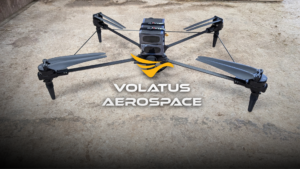
This is where long-endurance uncrewed aircraft can complement the existing system. The K1000ULE, for example, is an ultra-long-endurance intelligence platform capable of operating over remote areas for extended periods with sensors. It could monitor areas of elevated risk, investigate potential fires identified through satellite or lightning data, and remain over an emerging incident as conditions change.
The point is not to choose between satellites, conventional aircraft and uncrewed systems. The opportunity is to combine them. I have described this broader concept as a Wildfire Intelligence Shield: an additional layer connecting existing intelligence with persistent airborne surveillance, remote operations and faster response.
Better intelligence has its greatest value when it leads to better decisions. Modern operations centres can bring satellite, airborne and ground information into a common picture so wildfire managers can understand what is happening, what is at risk and what resources should be deployed.
Technology, however, does not replace the people who fight fires. Canada’s firefighters, water bombers, helicopters, detection aircraft and established wildfire aviation operators will remain central to wildfire response. The objective is to make those resources more effective and increase the likelihood that threatening fires are addressed before they require a much larger response.
Not every wildfire should be extinguished. The priority is those that threaten communities, critical infrastructure or other areas where intervention is necessary, and in those cases time can make an enormous difference. Canadian fire-management policy already recognizes that suppression decisions differ according to what is at risk.
FlyOX 1, which Volatus is working to introduce into Canada, has the potential to provide an additional rapid-response option, particularly where long endurance, remote operation or reduced crew exposure offers an advantage. A water bomber may be right for one mission, a helicopter and ground crew for another, while a K1000ULE may provide persistent intelligence over a high-risk region.
The future of wildfire aviation, in my view, will not be a choice between crewed and uncrewed aircraft. It will be an integrated system combining experienced aviation operators and proven aircraft with persistent intelligence, remotely operated systems and new response capabilities, using each where it is most effective. Any new aviation capability must operate within established incident-command, aviation-safety and airspace-management procedures under the direction of the responsible wildfire agency.
The economics may be as important as the technology. Large purpose-built water bombers such as the Canadair CL-415 and next-generation DHC-515 are highly capable assets whose heavy suppression capacity will remain indispensable. They are also major capital investments; Alberta’s recent commitment of approximately $400 million for five DHC-515s illustrates the scale involved.
A distributed autonomous response layer offers a different economic model. Depending on final configuration, procurement and operating economics, the capital required for a single large airtanker could potentially support several smaller remotely operated response aircraft positioned closer to areas of elevated risk. The comparison is not payload for payload: a DHC-515 carries far more water. The better question is whether persistent intelligence and distributed response can prevent some emerging fires from becoming large enough to require that level of intervention.
There is also the potential to extend the operating window. A fire does not stop developing when crewed aerial operations stand down. Where safely authorized and integrated with incident command, remotely operated systems could maintain surveillance and potentially support aspects of response beyond traditional daylight operations. The goal is additive: preserve large airtankers for missions where their capacity matters most, while adding a lower-cost layer focused on persistence, coverage and earlier intervention.
The same capability has applications beyond wildfire. Persistent airborne intelligence, remote operations and aircraft capable of moving meaningful payloads could support flood and severe-weather response, search and rescue, emergency communications, infrastructure assessment and critical supply delivery when access is disrupted.
Canada already has mechanisms for working across jurisdictions. The Canadian Interagency Forest Fire Centre coordinates the sharing of aircraft, personnel and equipment among federal, provincial and territorial wildfire agencies. New capabilities should strengthen these systems rather than create parallel ones.
Canada already has many of the pieces required: experienced wildfire professionals, established aviation operators, strong science, satellite intelligence, remote operations, emerging autonomous aircraft and a domestic aerospace industry capable of integrating and sustaining these systems in Canada, while drawing on trusted international partners where appropriate.
Wildfire management will continue to be led primarily by provincial and territorial agencies, with the federal government playing an important role in science, national coordination, capability development and surge capacity. The opportunity is to connect and strengthen the system that exists while adding capabilities that were not available even a few years ago.
The question is straightforward: how do we give the people already protecting our communities better information, more options and more time to act? If the result is that more threatening fires can be contained while they are still small, while also strengthening Canada’s ability to respond when other emergencies occur, that is an objective worth pursuing.