
SECTOR
CLASSIFICATION:-
HAZARD / FWI:-
ACTIVE WILDFIRE HOTSPOTS 00 ACTIVE

Wildfire Response and Aerial Intelligence

Earlier Detection.
Faster Decisions.
Stronger Response.

Real-time aerial intelligence and autonomous capabilities to detect wildfires earlier, accelerate decisions, and strengthen response across Canada.

Aerial Intelligence for Wildfire Response

Wildfire conditions can change in minutes. The sooner incident commanders can see where a fire is moving, understand emerging risks and track resources in the field, the better positioned they are to protect crews, communities and critical infrastructure.

Volatus Aerospace brings together crewed and uncrewed aircraft, persistent aerial intelligence, resilient communications, heavy-lift autonomous platforms and mission-control expertise to support wildfire preparedness, active response and recovery.
Volatus Aerospace
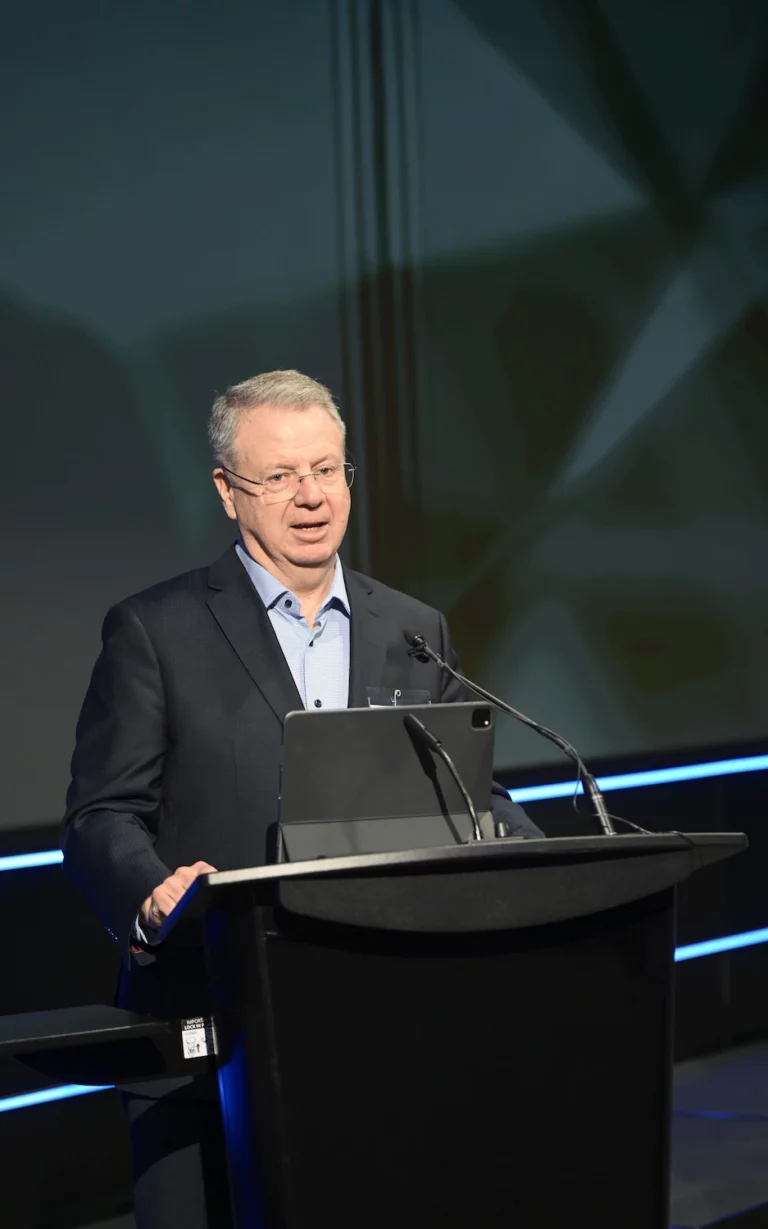
“Canada already operates one of the world’s most respected aerial firefighting fleets. Our objective isn’t to replace it, it’s to strengthen it with a new class of autonomous aircraft capability that can detect earlier, respond faster, operate closer to emerging incidents, and provide governments with new operational options when time matters most”

Glen Lynch

CHIEF EXECUTIVE OFFICER, Volatus Aerospace.

Building a Sovereign Canadian Wildfire Capability

Volatus’ integrated Canadian capability brings together advanced aircraft, operational services, mission-management technologies, training, lifecycle support and domestic manufacturing. Centred initially on wildfire response, this same architecture supports broader emergency-management, Arctic domain-awareness, public-safety and defence missions.

Advanced Aircraft

Training

Lifecycle Support

Domestic Manufacturing

Mission-Management Technologies

An Integrated Capability Across the Wildfire Lifecycle

Effective wildfire management begins before smoke is visible and continues long after the immediate threat has passed. Volatus supports wildfire agencies across preparedness, detection, active response, and recovery.

Prepare and Detect

Monitor vegetation, terrain and thermal anomalies across large or remote areas. Visual, thermal and geospatial sensing can help identify changing risk conditions and emerging fire activity earlier.

Capabilities include:

Understand and Coordinate

Maintain a continuously updated operational picture as an incident evolves. Live video, thermal intelligence, perimeter mapping, weather and terrain data, responder locations and communications support help incident command assess conditions.

Capabilities include:

Respond and Resupply

Extend operational reach into remote or hazardous environments. Heavy-lift autonomous aircraft can complement conventional aviation by delivering suppressant, equipment and essential supplies closer to an incident without placing an onboard pilot at risk.

Capabilities include:

Recover and Restore

Map burned areas, assess infrastructure and environmental damage, and support recovery planning. Heavy-lift aerial seeding can also help accelerate reforestation where terrain, scale or safety constraints make conventional planting difficult.

Capabilities include:

A New Class of Wildfire Response Technology

Volatus is bringing together three complementary capabilities: operational aerial services, persistent intelligence and resilient communications, and heavy-lift autonomous response. Together, they help wildfire agencies understand evolving incidents and act with greater speed, reach and flexibility.

Heavy-Lift Autonomous Wildfire Response

FlyOx 1

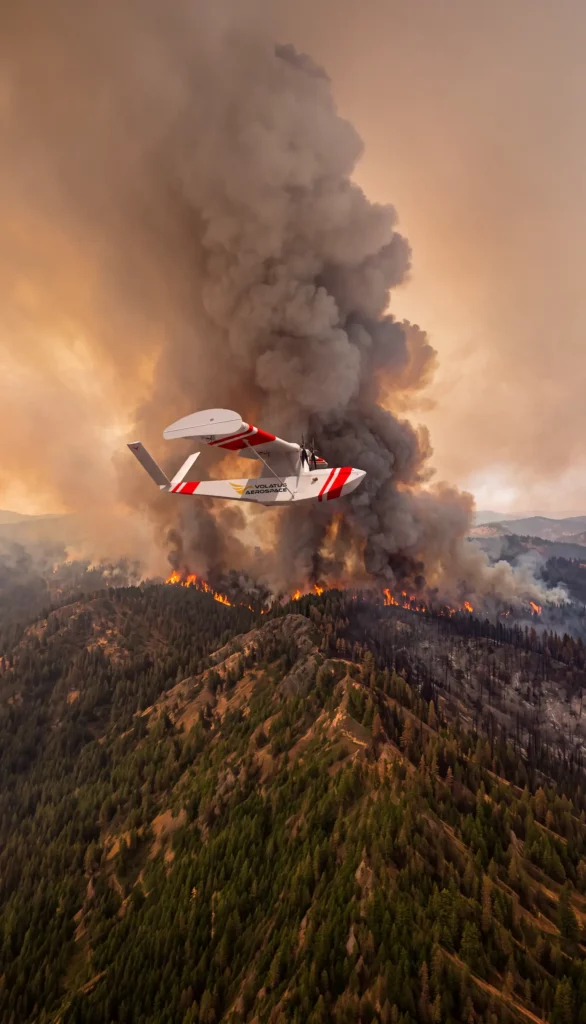
Through its strategic partnership with Singular Aircraft, Volatus is advancing the introduction of the FlyOx 1 as a heavy-lift autonomous aircraft capability for Canadian wildfire response.

Heavy payload capacity, long endurance, amphibious capability, automatic takeoff and landing, and the ability to operate from unprepared airstrips create options for forward deployment closer to emerging incidents.

Persistent Intelligence & Resilient Communications

K1000ULE & ATNE++

Through its strategic partnership with Kraus Hamdani Aerospace, Volatus is advancing the introduction of the K1000ULE ultra-long-endurance autonomous aircraft and ATNE++ resilient airborne communications architecture to support Canadian wildfire operations.

The fully electric K1000ULE is designed for continuous operations across large and remote environments. Combined with ATNE++, it can support electro-optical and infrared intelligence, live fire-perimeter mapping, thermal hotspot detection, communications relay, responder tracking and unified-command coordination throughout an incident.

Canadian deployment of the K1000ULE, ATNE++ and FlyOx 1 remains subject to applicable regulatory approvals and the successful completion of technical, operational and commercial evaluations.

Watch intelligence become action.

A simulated incident. The gold line is an aerial sensor pass when it physically crosses an emerging hotspot, detection happens. Hover the map for live geo-referenced coordinates.

LIVE · SIMULATED INCIDENT LIVE INCIDENT
HOVER FOR LIVE COORDINATES

Demonstration interface. Actual missions operate subject to applicable regulatory, airspace, safety and operational requirements.

FLYOX 1-Uncrewed Amphibious Fire Bomber

01 · ATOL TAKEOFF
IAS0 KT
ALT AGL0 FT
HDG360
V/S+0 FPM
TANK A0 L
TANK B0 L
GW / MTOW2,380 / 4,000 KG
FUEL540 KG
VENTRAL DOORS CLOSED
IAS0 KT
ALT0 FT
WATER0 L
CLOSED
INITIALIZING 3D FLIGHT SYSTEMS...

Why Volatus Aerospace?

01

Integrated Crewed and Uncrewed Operations

Match the aircraft, sensor and operating model to the mission—from rapid local assessment to persistent regional monitoring and heavy-lift support.

02

Decision-Ready Intelligence

Transform visual, thermal, telemetry and geospatial data into a common operational picture that supports incident-command decisions.

03

Mission Control and Operational Expertise

Coordinate aircraft, data and field operations through experienced mission planning, regulatory support and centralized operational oversight.

04

Support That Scales

Deploy capabilities for a single incident, a regional program or a sustained national requirement while complementing existing wildfire-management resources.

Build a Stronger Wildfire Program

Whether you are preparing for the next fire season, strengthening persistent monitoring or evaluating autonomous aircraft for active response and recovery, Volatus can help define operational requirements, identify the right mix of capabilities and develop a pathway that works within Canada’s regulatory and incident-command environment.

Frequently Asked Questions

01How can drones and autonomous aircraft support wildfire response?
They can support risk assessment, early detection, thermal hotspot identification, persistent monitoring, fire-perimeter mapping, communications relay, crew resupply, aerial suppression and post-fire assessment. The appropriate platform depends on the mission, airspace and operating conditions.
Yes, where applicable regulatory, airspace, safety and operational requirements are met. Active wildfire airspace is complex, and every mission must be coordinated with the responsible authorities and incident-command structure.
Persistent aerial intelligence combines long-endurance aircraft, sensors, communications, analytics and operational workflows to maintain an updated picture of an incident as conditions change. It helps decision-makers move from periodic observations to continuous awareness.